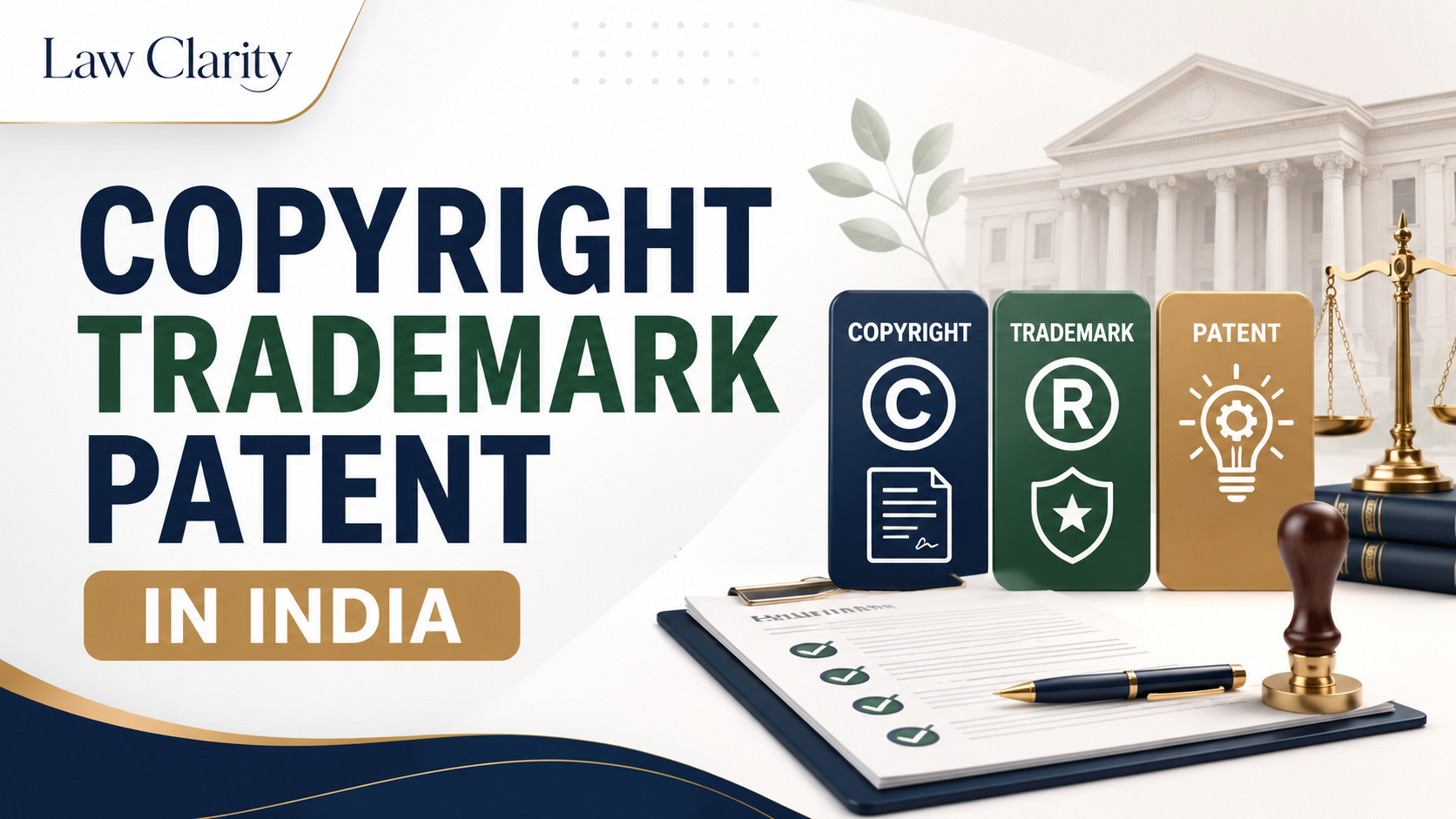
Many people searching for the difference between copyright trademark and patent in India are unsure about which legal protection applies to their work, business, logo, invention, software, or content. A startup founder may want to protect a brand name, while a YouTube creator may want to stop others from copying videos. Similarly, an inventor may want protection for a new product or technology.
In India, copyright, trademark, and patent are all part of intellectual property rights, but they protect very different things. Understanding the difference can help creators, businesses, developers, artists, and entrepreneurs avoid confusion and take informed decisions.
This article is general legal information only and not legal advice. Laws, procedures, and registration requirements may change over time, so readers should verify details from official government sources or speak with a qualified lawyer for advice on their specific situation.
Quick Answer
Copyright protects original creative work such as videos, books, music, software code, and artwork. Trademark protects brand identity elements such as logos, slogans, and business names. Patent protects new inventions, products, processes, or technologies.
All three are different forms of intellectual property protection under Indian law. The correct protection depends on what you are trying to protect. In some situations, a business may use more than one type of protection at the same time.
Key Takeaways
- Copyright protects creative expression, not ideas.
- Trademark protects brand identity and consumer recognition.
- Patent protects inventions and technical innovations.
- Registration rules are different for copyright, trademark, and patent.
- A logo may qualify for trademark protection, while software code may qualify for copyright protection.
- Patent protection usually requires detailed examination and approval.
- Businesses often use multiple intellectual property protections together.
Table of Contents
Introduction
Quick Answer
Key Takeaways
What Is Intellectual Property in India?
What Is Copyright?
What Is a Trademark?
What Is a Patent?
Difference Between Copyright, Trademark, and Patent
Which Protection Applies to Different Types of Work?
Can One Product Have Multiple Protections?
Step by Step Process
Documents or Details to Keep Ready
Simple Example
Common Mistakes People Should Avoid
Official Links to Verify
When Should You Speak to a Lawyer?
FAQs
Final Thoughts
What Is Intellectual Property in India?
Intellectual property refers to legal rights given to creators, inventors, businesses, and owners over their original work or innovations.
In India, intellectual property rights are governed through different laws and administered through government departments such as the Intellectual Property India office.
Common types of intellectual property include:
- Copyright
- Trademark
- Patent
- Design rights
- Geographical indications
These protections help creators and businesses control the use of their work and reduce unauthorized copying or misuse.
What Is Copyright?
Copyright protects original creative work. It usually applies to content that has been created and expressed in a fixed form.
Examples include:
- Books
- Articles
- Songs
- Films
- Photographs
- YouTube videos
- Software code
- Paintings
- Website content
In India, copyright protection is governed by the Copyright Act, 1957.
What Copyright Does Not Protect
Copyright generally does not protect:
- Ideas
- Concepts
- Titles
- Short phrases
- Facts
- Methods or systems
For example, the idea for a mobile app may not get copyright protection, but the actual source code and design elements may qualify for protection.
Is Copyright Registration Mandatory?
In many situations, copyright exists automatically once original work is created. However, registration may still help as evidence in disputes or ownership claims.
Readers can check official information on the Copyright Office website.
What Is a Trademark?
A trademark protects brand identity. It helps consumers identify the source of goods or services.
Examples include:
- Business names
- Brand names
- Logos
- Taglines
- Product names
- Symbols
For example, a company logo or a coaching institute brand name may be protected as a trademark.
Trademark protection in India is governed by the Trade Marks Act, 1999.
Why Trademarks Matter
Trademarks help businesses:
- Build brand recognition
- Prevent confusion in the market
- Protect business reputation
- Take action against unauthorized use in certain situations
Can a Trademark Be Registered?
Yes. Trademark registration can be applied for through the Intellectual Property India portal.
However, not every name or logo automatically qualifies for registration. Generic or descriptive terms may face objections depending on the facts.
What Is a Patent?
A patent protects inventions. This usually includes a new product, process, machine, technical solution, or innovation.
Patent law in India is governed by the Patents Act, 1970.
Examples may include:
- A new manufacturing process
- A medical device
- A technical machine
- Certain software-related inventions combined with technical innovation
- Industrial technology
Basic Conditions for Patent Protection
An invention generally needs to satisfy certain legal conditions such as:
- Novelty
- Inventive step
- Industrial applicability
Patent applications are examined before grant. Not every application is approved.
How Long Does Patent Protection Last?
Patent protection in India is generally available for a limited period subject to legal requirements and renewal obligations. Readers should verify the latest rules from official patent authorities.
Difference Between Copyright, Trademark, and Patent
| Feature | Copyright | Trademark | Patent |
|---|---|---|---|
| Protects | Creative work | Brand identity | Inventions |
| Examples | Videos, books, music, software code | Logo, brand name, slogan | Machines, products, technical processes |
| Main Purpose | Prevent copying of original expression | Prevent market confusion | Protect innovation |
| Registration | Optional in many cases | Recommended for stronger protection | Usually necessary |
| Governing Law | Copyright Act, 1957 | Trade Marks Act, 1999 | Patents Act, 1970 |
| Duration | Depends on legal provisions | Renewable subject to law | Limited term subject to patent law |
| Common Users | Creators, writers, developers | Businesses and brands | Inventors and companies |
Which Protection Applies to Different Types of Work?
YouTube Videos
Videos may qualify for copyright protection.
Company Logo
A logo is commonly protected through trademark registration.
Mobile App
Different parts may receive different protections.
For example:
- App code may qualify for copyright protection
- Brand name may qualify for trademark protection
- Technical innovation may potentially involve patent issues in limited situations
New Product Invention
A technical invention may require patent protection if legal conditions are satisfied.
Business Name
A business name may receive trademark protection if eligible.
Can One Product Have Multiple Protections?
Yes. A single product or business may involve multiple intellectual property protections.
For example, a smartphone company may use:
- Trademark protection for the brand name
- Copyright protection for software and advertisements
- Patent protection for hardware technology or innovation
This is common in technology, entertainment, and manufacturing industries.
Why Understanding the Difference Matters
Many people incorrectly assume that one registration protects everything.
For example:
- Registering a company under the Ministry of Corporate Affairs does not automatically give trademark protection.
- Copyright registration does not automatically protect a business name as a trademark.
- Patent rights are different from ownership of creative content.
Choosing the wrong type of protection may create legal confusion later.
Step by Step Process
Step 1: Identify What You Want to Protect
Ask whether you want to protect:
- Creative content
- Brand identity
- Technical invention
This determines whether copyright, trademark, or patent law is relevant.
Step 2: Search Existing Registrations
Before applying for trademark or patent protection, check whether similar registrations already exist.
Official searches may be available through the Intellectual Property India portal.
Step 3: Prepare Documents and Details
Keep ownership proof, business details, descriptions, and samples ready.
Step 4: File Application Through Official Portal
Applications may be filed online through government portals.
Step 5: Monitor Status and Respond if Required
Some applications may receive objections, examination reports, or clarification requests.
Step 6: Speak to a Qualified Lawyer if Needed
Complex disputes, infringement issues, or rejected applications may require professional legal guidance.
Documents or Details to Keep Ready
Depending on the type of protection, people commonly keep the following ready:
For Copyright
- Identity proof
- Work samples
- Ownership details
- Date of creation
- Author details
For Trademark
- Brand name or logo
- Business details
- User date, if applicable
- Goods or services category
- Identity and address proof
For Patent
- Technical description
- Drawings or specifications
- Inventor details
- Technical documents
- Declaration forms, where applicable
Requirements can vary depending on the facts and latest rules.
Simple Example
Suppose a startup creates a food delivery app in India.
Different legal protections may apply:
- The app name may qualify for trademark protection.
- The app code and graphics may qualify for copyright protection.
- A new delivery technology or technical innovation may potentially involve patent considerations.
Each protection serves a different legal purpose.
Common Mistakes People Should Avoid
Assuming Copyright Protects Brand Names
Brand names are generally associated with trademark protection, not copyright.
Sharing Inventions Publicly Before Patent Filing
Public disclosure may affect patent-related rights in some situations.
Using Logos Without Proper Checks
Using a logo similar to another registered trademark may create disputes.
Ignoring Official Verification
People sometimes rely on unofficial advice instead of checking government portals.
Believing Registration Guarantees Success
Registration does not automatically guarantee victory in every dispute. Legal outcomes depend on facts, evidence, and applicable law.
Official Links to Verify
Intellectual Property India e-Services
Department for Promotion of Industry and Internal Trade
When Should You Speak to a Lawyer?
You should consider speaking with a qualified lawyer if:
- Someone copied your work or brand
- You received a trademark or copyright notice
- Your patent or trademark application was objected to
- You are launching a startup or product
- You are signing licensing or ownership agreements
- There is confusion about ownership rights
- Your business depends heavily on intellectual property
A lawyer can help review facts, documents, contracts, and legal risks specific to your situation.
FAQs
Is copyright the same as trademark?
No. Copyright protects creative work, while trademark protects brand identity such as logos and business names.
Can I protect my logo with copyright?
A logo may sometimes involve copyright elements, but businesses commonly use trademark protection for logos and brand identity.
Do I need to register copyright in India?
Copyright may exist automatically in many situations, but registration may help as evidence in disputes.
Can an idea be patented in India?
A general idea alone may not qualify for patent protection. Patent eligibility depends on legal conditions and technical details.
Is company registration the same as trademark registration?
No. Registering a company through the Ministry of Corporate Affairs does not automatically grant trademark rights.
Can software be patented in India?
This depends on the facts, technical nature, and legal requirements. Certain software-related inventions may involve patent issues in limited situations.
How can I check trademark availability in India?
Readers can use the official Intellectual Property India portal to search existing trademarks.
What should startups protect first?
This depends on the business model, product, branding, and intellectual property involved. Many startups begin with trademark protection for their brand identity.
Final Thoughts
Understanding the difference between copyright, trademark, and patent in India can help creators, businesses, developers, and inventors choose the correct legal protection for their work.
Each type of intellectual property serves a different purpose. Copyright protects creative expression, trademark protects brand identity, and patent protects inventions and innovation.
Before filing any application or taking legal action, it is a good idea to verify details from official government portals and speak with a qualified lawyer if your situation involves disputes, commercial risks, ownership conflicts, or technical legal questions.
Legal rights and outcomes depend on specific facts, documents, timelines, and applicable laws.