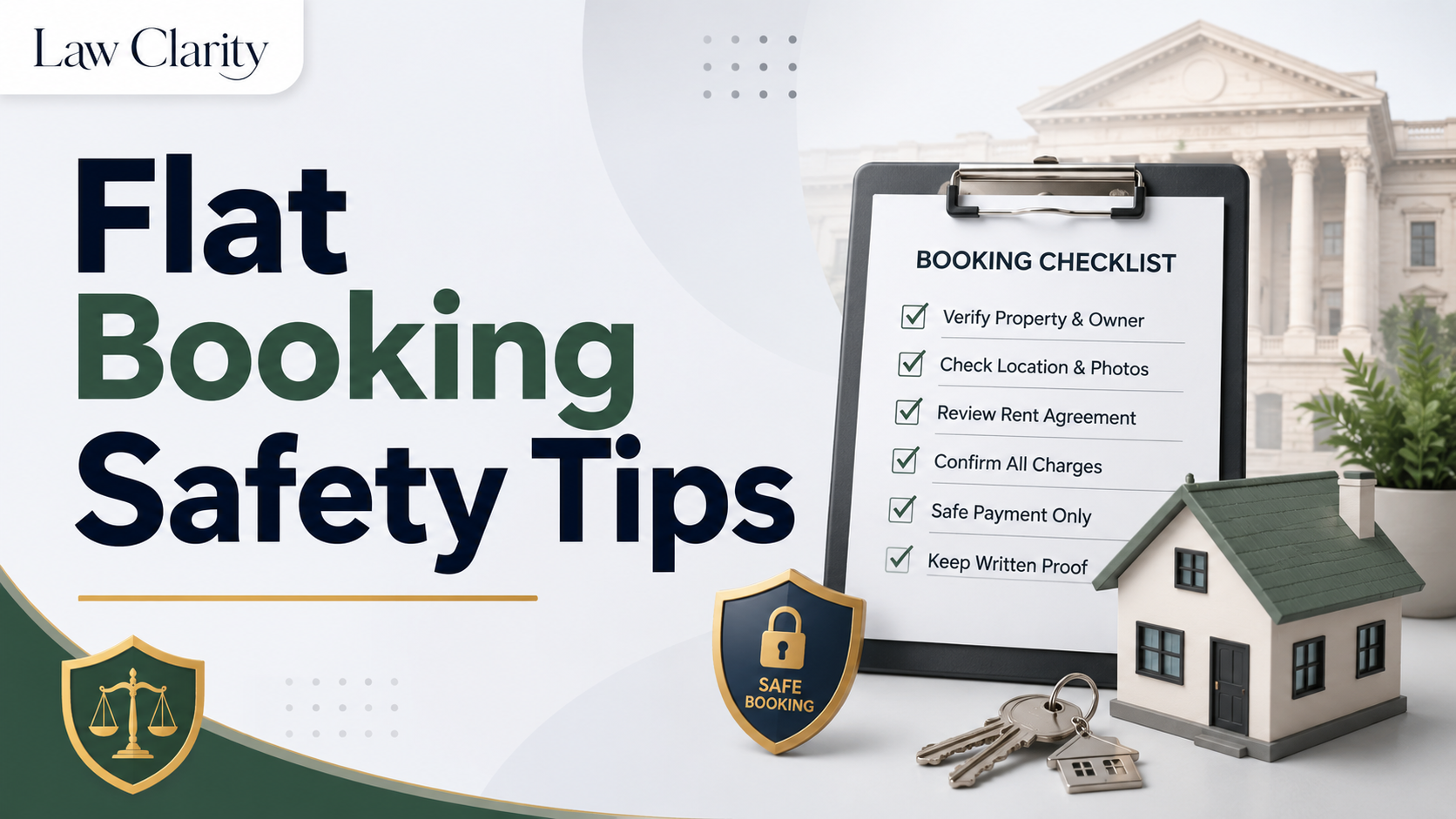
Understanding the things to check before booking PG online in India is important for students, tenants, and working professionals who are searching for rental accommodation through websites, apps, brokers, or social media. Online property platforms have made flat and PG hunting easier, but fake listings, advance payment scams, hidden charges, and rental fraud cases are also becoming more common.
Many people transfer token amounts or deposits without properly verifying the owner, agreement terms, or property details. In some situations, tenants later discover that the listing was fake, the room was different from the photos, or extra charges were not disclosed earlier.
This article explains practical safety checks, document verification steps, payment precautions, common warning signs, and basic legal options related to online PG and flat booking in India. This article is general legal information only and not legal advice.
Quick Answer
Before booking a PG or flat online, verify the owner or broker, inspect the property through a physical visit or live video call, and carefully review the rent agreement before making payment. Avoid transferring large advance amounts without written confirmation and proper receipts.
Always save screenshots, payment proof, agreement drafts, and chat records. If online fraud or fake property listings are suspected, complaints may be filed through the National Cyber Crime Reporting Portal or other appropriate authorities depending on the facts of the case.
Key Takeaways
- Verify the owner, broker, or property manager before payment.
- Avoid full advance payment before inspection and agreement review.
- Read the rent agreement carefully before signing.
- Save payment records, chats, and screenshots safely.
- Be cautious of unusually cheap rental offers.
- Confirm all maintenance, brokerage, and utility charges in writing.
- Use official complaint portals if fraud or online cheating is suspected.
Table of Contents
Introduction
Why Online PG and Flat Scams Happen
Things to Check Before Booking PG Online in India
Documents You Should Verify
Important Rent Agreement Checks
Payment Safety Tips for Tenants
Warning Signs of Fake Rental Listings
What to Do If You Face Online Rental Fraud
Step by Step Process
Documents or Details to Keep Ready
Simple Example
Common Mistakes People Should Avoid
Official Links to Verify
When Should You Speak to a Lawyer?
FAQs
Final Thoughts
Why Online PG and Flat Scams Happen
Online rental scams usually target people who urgently need accommodation in another city. Students joining college, employees relocating for work, and first time tenants are commonly targeted.
Fraudsters may use:
- Fake property photos
- Copied advertisements
- False owner identities
- Fake brokerage services
- Misleading rent offers
- Advance token payment demands
- False promises about facilities or refunds
Some fake listings disappear immediately after receiving payment. In other cases, tenants discover hidden charges or agreement issues after moving in.
Things to Check Before Booking PG Online in India
Verify the Property Owner or Broker
One of the most important things to check before booking PG online in India is whether the person advertising the property is genuine.
Ask for:
- Full name
- Mobile number
- Office address if dealing with a broker
- Government ID proof
- Ownership proof or authority letter
If the person refuses basic verification, proceed carefully before making payment.
Visit the Property or Arrange a Live Video Call
A physical visit is always preferable before finalizing a rental property.
If you are in another city and cannot visit personally, request a live video call instead of relying only on photos or prerecorded videos.
During the video call, check:
- Building entrance
- Room condition
- Washroom and kitchen
- Furniture and appliances
- Water supply
- Security arrangements
- Nearby surroundings
This may help identify misleading or fake listings.
Compare Rent With Similar Properties
Extremely low rent compared to nearby properties can sometimes indicate:
- Fake advertisements
- Hidden charges
- Shared occupancy conditions
- Fraud attempts
Compare prices across multiple rental platforms before deciding.
Check the Exact Location
Verify the actual property location using:
- Google Maps
- Nearby landmarks
- Reviews if available
- Area safety information
Some fake listings use attractive photos but provide misleading addresses.
Confirm Facilities and Services Clearly
For PG accommodation, ask whether the following are included:
| Facility | What to Confirm |
|---|---|
| Food | Included or extra charges |
| WiFi | Speed and monthly limits |
| Electricity | Fixed or meter based |
| Laundry | Free or paid |
| Housekeeping | Frequency |
| Security | CCTV or guards |
| Parking | Available or not |
Ask for written clarification wherever possible.
Documents You Should Verify
Identity Proof of Owner or Broker
You may ask for:
- Aadhaar card
- PAN card
- Passport
- Driving licence
Basic identity verification can help reduce risk.
Ownership or Property Related Documents
The owner or property manager may provide:
- Electricity bill
- Property tax receipt
- Society maintenance bill
- Ownership proof
- Authorization letter
If a broker claims to represent the owner, ask for confirmation.
Rent Agreement Draft
Before paying a large amount, ask for a draft of the rent agreement.
Review whether it clearly mentions:
- Monthly rent
- Deposit amount
- Notice period
- Lock in period
- Guest restrictions
- Maintenance charges
- Refund terms
- Move out conditions
Tenant Verification Rules
Tenant verification or police intimation rules can differ between states and cities.
You may verify local requirements through the relevant state police website or local police station.
Important Rent Agreement Checks
Many disputes happen because tenants do not carefully read the agreement before signing.
Check Refund Conditions
The agreement should clearly explain:
- Security deposit refund process
- Possible deductions
- Notice period rules
- Damage related deductions
Understand Lock In Clauses
Some agreements may contain lock in periods that restrict early exit.
Read these clauses carefully before signing.
Clarify Maintenance Responsibility
The agreement should ideally explain who will handle:
- Minor repairs
- Appliance maintenance
- Cleaning charges
- Utility bills
Confirm Payment Due Dates
Late payment penalties or conditions should be clearly mentioned.
Payment Safety Tips for Tenants
Avoid Full Advance Payment
Do not pay the full deposit before:
- Property verification
- Agreement review
- Owner verification
- Inspection or video call
Use Traceable Payment Methods
Prefer:
- Bank transfer
- Verified UPI payment
- Digital payment with receipt
Avoid large cash payments without proof.
Save All Records
Keep copies of:
- Property advertisements
- Payment screenshots
- Bank statements
- WhatsApp chats
- Emails
- Agreement copies
- Broker receipts
These records may help if disputes arise later.
Confirm Refund Policies in Writing
If you are paying a token amount or booking amount, ask whether it is refundable.
Written confirmation may help avoid confusion later.
Warning Signs of Fake Rental Listings
Pressure to Pay Immediately
Scammers may create urgency by saying:
- "Another tenant is ready to pay"
- "Only one room left"
- "Offer valid today"
Avoid rushed payment decisions.
Refusal to Share Documents
Be careful if the owner or broker refuses to provide:
- ID proof
- Agreement draft
- Property details
- Office address
Communication Only Through Messages
If someone repeatedly avoids calls or video verification, verify carefully before paying.
Different Payment Account Names
Ask questions if the payment account belongs to a different person unrelated to the property or brokerage service.
Unclear Refund Terms
Do not rely only on verbal promises regarding refund of deposit or token amounts.
What to Do If You Face Online Rental Fraud
Report the Listing
If the property was listed on a website or app, report the account and advertisement immediately.
Keep Evidence Safely
Save all available evidence including:
- Screenshots
- Payment proof
- Advertisements
- Chats
- Emails
- Call records
File an Online Cyber Complaint
If online payment fraud or cheating is suspected, complaints may be filed through:
National Cyber Crime Reporting Portal
The action taken can depend on the facts, payment trail, evidence, and jurisdiction involved.
Consumer Complaint Options
In some situations involving misleading advertisements or paid services, consumer complaint remedies may also be considered.
Useful official portals include:
Step by Step Process
Step 1: Shortlist Verified Properties
Compare location, rent, facilities, and reviews across multiple sources.
Step 2: Verify Owner or Broker Details
Request identity proof, ownership information, and office details.
Step 3: Visit or Arrange a Live Video Call
Inspect the room and surroundings carefully.
Step 4: Discuss Charges Clearly
Confirm rent, maintenance, brokerage, and deposit terms in writing.
Step 5: Review the Agreement
Read important clauses before signing or paying.
Step 6: Make Payment Through Safe Methods
Use traceable payment methods and collect receipts.
Step 7: Save All Records
Keep agreement copies, screenshots, payment proof, and chats safely.
Documents or Details to Keep Ready
Before finalizing the booking, keep these ready:
- Aadhaar card or other ID proof
- Employment or student ID
- Passport size photographs if required
- Payment screenshots
- Agreement copy
- Owner contact details
- Property address
- Broker information
- Emergency contact details
Simple Example
A student relocating to Hyderabad found a PG online at a very low rent. The broker demanded an immediate booking amount and refused to arrange a live video call.
Before paying, the student requested ownership proof and a rent agreement draft. The broker stopped responding after repeated verification requests.
By delaying payment until proper verification was completed, the student avoided a possible rental fraud situation.
Common Mistakes People Should Avoid
- Paying token amounts without verification
- Ignoring agreement terms
- Trusting only edited property photos
- Not checking refund conditions
- Sharing unnecessary personal documents
- Failing to save payment proof
- Depending only on verbal promises
- Skipping property inspection
- Ignoring hidden maintenance charges
Official Links to Verify
National Cyber Crime Reporting Portal
Ministry of Housing and Urban Affairs
When Should You Speak to a Lawyer?
You should consider speaking with a qualified lawyer if:
- A large amount of money is involved
- Ownership documents appear doubtful
- The agreement contains unclear clauses
- Refund disputes become serious
- Someone threatens legal action
- Identity misuse or forged documents are suspected
- Police complaints or court proceedings may become necessary
A lawyer can review documents and explain possible legal options based on your specific facts and applicable laws.
FAQs
Is it safe to book a PG online in India?
It can be safer if proper verification is done before payment. Always inspect the property and review documents carefully.
What is the safest payment method for rental bookings?
Bank transfers or verified UPI payments with written receipts are generally safer than cash payments without proof.
Should I visit the property before booking?
A physical visit is preferable. If not possible, request a live video call before transferring money.
What documents should I ask from the owner?
You may ask for ID proof, ownership related documents, utility bills, and a rent agreement draft.
Can I complain about fake rental listings?
Depending on the facts, complaints may be filed through rental platforms, cyber complaint portals, or consumer authorities.
Are booking token amounts refundable?
Refundability depends on the agreement terms and written communication between the parties.
Is police verification compulsory for tenants?
Rules can differ between states and cities. Verify local requirements through the relevant police authority.
What should I do if the broker refuses verification?
Avoid making payment until proper verification is completed.
Final Thoughts
Online flat and PG booking has become convenient, but tenants should still verify documents, agreements, and payment details carefully before transferring money. Understanding the things to check before booking PG online in India can help reduce the risk of scams, fake listings, and rental disputes.
Always keep written proof of communication and payments. If documents appear suspicious or the dispute becomes serious, speak with a qualified lawyer for guidance based on your specific facts and local laws. Legal outcomes can depend on the agreement terms, available evidence, and circumstances involved.