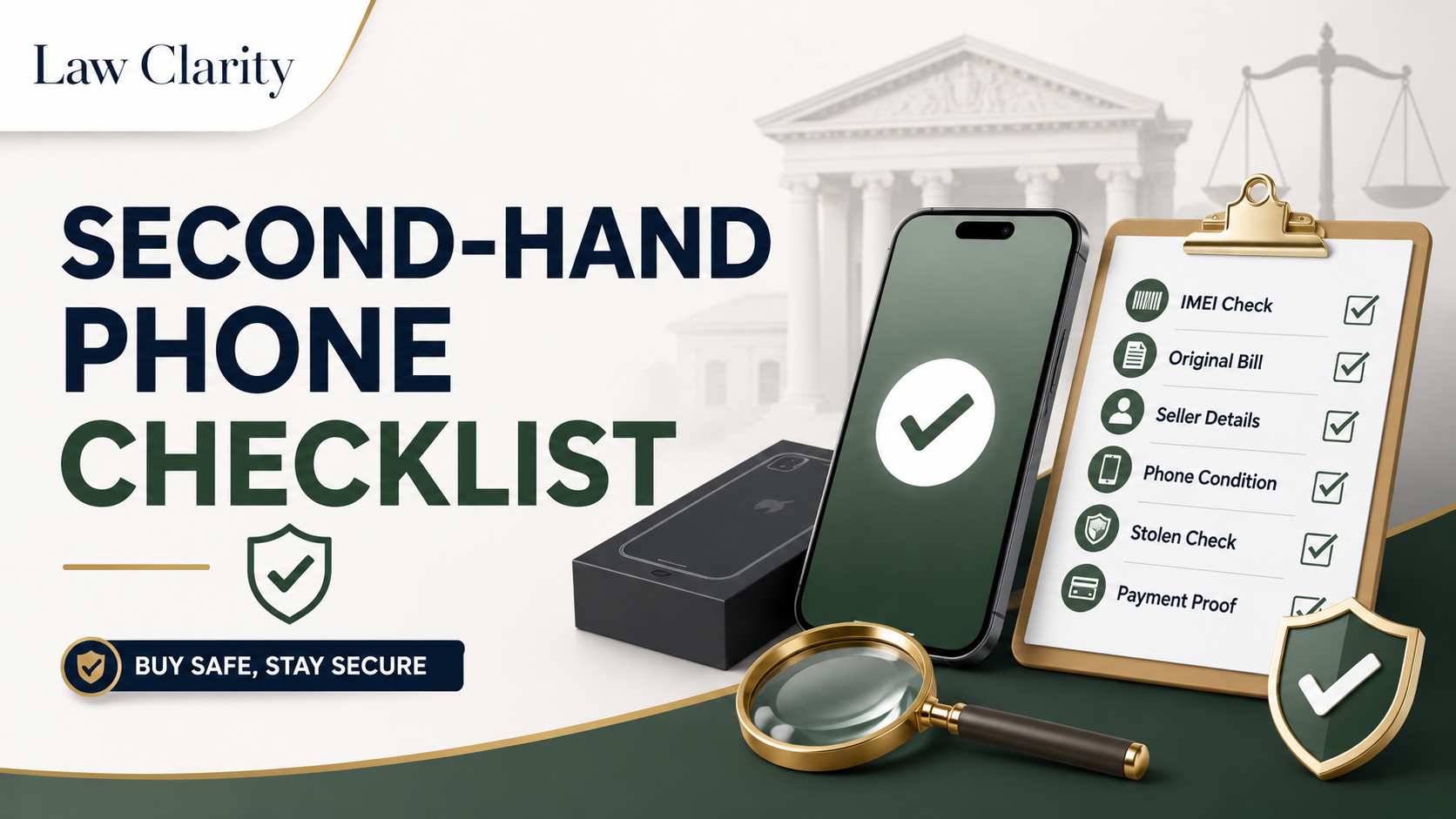
Buying a used smartphone can help you save money, but it also comes with risks. Many people search for what to check before buying second hand phone in India because they want to avoid stolen devices, fake bills, blocked IMEI numbers, hidden defects, or online scams. A cheap deal may later turn into a legal or consumer problem if proper checks are not done before payment.
This article explains the practical checks you should do before purchasing a second-hand phone in India. It also covers common fraud risks, important documents, IMEI verification, and consumer safety tips. This is general legal information only and not legal advice. Rules, platform policies, and police procedures may differ depending on the facts and local authorities.
Quick Answer
Before buying a second-hand phone in India, always verify the IMEI number, original invoice, seller identity, and device condition. Check whether the phone is reported lost or stolen through the CEIR portal. Avoid cash-only deals without proof of purchase. Test the battery, camera, display, charging port, and network connectivity before making payment. Keep screenshots, bills, and chat records for future reference.
Key Takeaways
- Always match the IMEI number on the phone with the invoice and box.
- Avoid buying phones without bills or seller details.
- Verify whether the device is blocked or reported stolen.
- Meet sellers in safe public places for offline deals.
- Keep screenshots of chats, payment receipts, and advertisements.
- Test all important hardware features before payment.
- Speak with a lawyer if there is fraud, cheating, or ownership dispute.
Table of Contents
- Why second-hand phone checks matter
- Important things to verify before purchase
- IMEI and stolen phone verification
- Risks in online marketplace deals
- How to check documents and ownership
- Practical inspection checklist
- Step by step buying process
- Documents to keep ready
- Common mistakes buyers make
- Official verification links
- When to speak to a lawyer
- FAQs
- Final thoughts
Why You Should Be Careful Before Buying a Used Phone
Second-hand phones are commonly sold through local mobile shops, friends, social media groups, OLX, Facebook Marketplace, Telegram channels, and resale websites. While many sellers are genuine, some deals involve stolen phones, duplicate devices, fake accessories, or hidden hardware issues.
In some cases, buyers later discover that:
- The phone has been reported stolen
- The IMEI number is blacklisted
- The device has unpaid EMI or financing issues
- The battery has serious damage
- The display or motherboard was replaced unofficially
- The bill shared by the seller is fake
Doing a few checks before payment can reduce these risks.
Important Things to Check Before Buying a Second-Hand Phone
Verify the IMEI Number
Every mobile phone has a unique IMEI number. You can usually check it by dialing *#06# on the phone.
The IMEI displayed on the phone should match:
- The device box
- The original invoice
- The SIM tray or back panel, if applicable
If the numbers do not match, avoid the purchase until the seller clearly explains the reason.
Check Whether the Phone Is Reported Stolen
India's CEIR portal helps users report lost or stolen phones. A blocked or flagged device may create future problems for the buyer.
You can verify details through the official CEIR portal before buying the phone.
Ask for the Original Bill or Invoice
A genuine invoice helps establish ownership history. The invoice should ideally contain:
- Seller or buyer name
- Device model
- IMEI number
- Purchase date
- Retailer details
A missing bill does not automatically mean the phone is stolen, but it increases risk.
Test the Physical Condition
Carefully inspect the phone for:
- Cracked display
- Water damage
- Loose buttons
- Charging issues
- Camera problems
- Speaker and microphone defects
- Battery swelling or overheating
Do not rely only on appearance. Many refurbished phones look new externally but have internal issues.
Check Whether Parts Were Replaced
Ask the seller directly whether:
- The screen was replaced
- The battery was changed
- The motherboard was repaired
- The phone was refurbished
Unofficial repairs may affect future performance and warranty support.
IMEI Verification and Device Safety Checks
One of the most important steps is verifying the IMEI number properly.
Where You Can Find the IMEI
| Location | How to Check |
|---|---|
| Phone dial pad | Dial *#06# |
| Phone settings | About Phone section |
| Original invoice | Usually printed on bill |
| Device box | Printed label |
Why IMEI Verification Matters
The IMEI helps identify whether:
- The device matches official records
- The phone may be stolen
- The device has been blocked
- The phone details are inconsistent
If the seller refuses to share the IMEI before meeting, treat it as a warning sign.
Risks in Online Marketplace Deals
Many used phone transactions happen through online platforms. These deals may carry additional risks.
Common Online Scam Situations
#### Fake Advance Payment Scams
Some sellers ask buyers to pay a token amount before meeting. After payment, they disappear.
#### Box Swap or Fake Device Fraud
A buyer may receive:
- A different model
- A dummy phone
- A damaged phone
- A locked device
#### Fake Bills and Warranty Claims
Edited invoices and fake warranty screenshots are common in resale markets.
Safer Ways to Buy
- Meet in a public place
- Avoid late-night meetings
- Test the phone before payment
- Prefer digital payments with transaction proof
- Avoid rushed transactions
How to Check Ownership and Device Details
Ask for Seller Identification
You may ask for basic ownership proof, especially in higher-value transactions.
This may include:
- Original purchase invoice
- Simple ID proof
- Phone number used for communication
Do not misuse another person's ID documents. Keep only necessary records related to the transaction.
Check Google or Apple Account Lock
Ensure the previous owner's account is removed before purchase.
For Android phones:
- Remove Google account lock
- Confirm factory reset works properly
For iPhones:
- Ensure Find My iPhone is disabled
- Check activation lock status
A locked device may become unusable later.
Verify Warranty Status
Some brands allow warranty verification through official websites or apps. Check whether:
- Warranty is active
- Device is genuine
- Repair history exists
Practical Checklist Before Payment
Hardware Checklist
- Display working properly
- Touchscreen responsive
- Cameras functioning
- Speakers clear
- Microphone working
- Charging port functioning
- Fingerprint sensor working
- Face unlock working
- Battery health acceptable
- SIM detection working
Software Checklist
- No unknown apps installed
- Phone resets properly
- Storage capacity matches advertisement
- Device is not rooted or jailbroken unless disclosed
Transaction Checklist
- IMEI matched
- Invoice checked
- Seller details saved
- Payment proof available
- Chat screenshots stored
Step by Step Process
Step 1: Research the Device Price
Compare prices for the same model on multiple resale platforms. A very low price may indicate a problem.
Step 2: Ask for Basic Details Before Meeting
Request:
- IMEI number
- Invoice photo
- Device condition photos
- Warranty information
Step 3: Meet in a Safe Place
Choose:
- Shopping malls
- Mobile stores
- Public cafes
- Service centers
Avoid isolated locations.
Step 4: Physically Test the Phone
Spend a few minutes checking:
- Display
- Battery
- Cameras
- WiFi
- SIM connectivity
- Charging
Step 5: Verify the IMEI
Cross-check the IMEI on:
- Device
- Invoice
- Box
You may also verify through the CEIR portal.
Step 6: Make Payment Carefully
Prefer:
- UPI
- Bank transfer
- Other traceable methods
Keep screenshots and receipts.
Step 7: Save Transaction Records
Store:
- Seller chat
- Invoice copy
- Payment proof
- Device photographs
These may help later if disputes arise.
Documents or Details to Keep Ready
Before completing the purchase, try to collect and store:
- Original invoice copy
- IMEI number screenshot
- Seller contact number
- Payment receipt
- Device photographs
- Chat screenshots
- Warranty details, if available
- Date and location of transaction
Simple Example
Rohan buys a second-hand smartphone through an online marketplace in Delhi. Before payment, he checks the IMEI number, compares it with the invoice, tests the camera and battery, and verifies that the Google account lock is removed. He also pays through UPI and saves screenshots of the seller conversation.
A few weeks later, the phone develops a charging issue. Since he has payment proof and seller details, he is in a better position to discuss the issue with the seller or seek legal guidance if needed.
Common Mistakes People Should Avoid
Buying Without an Invoice
Phones without bills carry higher ownership and fraud risks.
Ignoring IMEI Verification
Skipping IMEI checks may lead to problems if the device is blocked or reported stolen.
Paying Advance Amounts to Unknown Sellers
Avoid sending token money without verification.
Not Testing the Device Properly
A quick visual check is not enough. Always test important features.
Trusting Unrealistically Cheap Deals
Very low prices may indicate fake or stolen devices.
Forgetting to Remove Previous Account Locks
A locked device may become unusable after reset.
Official Links to Verify
Department of Telecommunications
National Cyber Crime Reporting Portal
When Should You Speak to a Lawyer?
You should consider speaking with a qualified lawyer if:
- The phone appears stolen or blocked
- The seller used fake documents
- There is suspected cheating or fraud
- You lost money in an online scam
- Police inquiry or seizure is involved
- A marketplace dispute becomes serious
- The transaction involved large amounts
A lawyer can help explain the available legal options based on the specific facts of the case.
FAQs
Is it legal to buy a second-hand phone in India?
Yes, buying a used phone is generally legal in India if the device is genuine and not linked to theft or fraud.
How can I check whether a phone is stolen?
You may verify device details and status through the official CEIR portal and compare the IMEI number carefully.
Is an original bill necessary for a used phone purchase?
It is strongly recommended because it helps verify ownership and device details.
What should I do if the IMEI number does not match?
Avoid purchasing the device until the seller provides a proper explanation and supporting documents.
Can I buy a second-hand iPhone without checking activation lock?
It is risky. A locked iPhone may become unusable after reset.
Should I avoid cash payments?
Traceable payment methods such as UPI or bank transfer are usually safer because they create transaction records.
What if the seller stops responding after payment?
Keep all screenshots, payment proofs, and transaction details. Depending on the facts, you may consider contacting the platform, consumer authorities, cyber portal, or a qualified lawyer.
Can refurbished phones be safe to buy?
Yes, many refurbished phones work properly. However, buyers should still verify warranty status, repairs, IMEI details, and seller credibility.
Final Thoughts
Buying a second-hand phone can be a practical way to save money, but careful verification is important. Simple checks like matching the IMEI number, verifying ownership documents, testing hardware, and keeping payment records can reduce the chances of fraud or future disputes.
This article is general legal information only and not legal advice. Legal outcomes and police or consumer processes may depend on the facts of the transaction, available evidence, platform policies, and local authorities. If you face a serious dispute or fraud issue, consider speaking with a qualified lawyer for advice related to your situation.